


Proton VPN has unveiled Proton Protocols, a new VPN protocol architecture aimed at enhancing the performance, reliability, and censorship resistance of its service. This development marks a significant step in VPN technology, promising faster connections and improved stability for users. But what exactly are Proton Protocols, and why do they matter? This article explores the key features of this new protocol codebase, its practical impact, and what it means for VPN users in the UK and beyond.
What Are Proton Protocols?
At its core, Proton Protocols is a fresh VPN protocol codebase developed by ProtonVPN. A VPN protocol governs how data is securely transmitted between your device and the VPN server. Common protocols today include OpenVPN, WireGuard, and IKEv2, each with their own strengths and weaknesses.
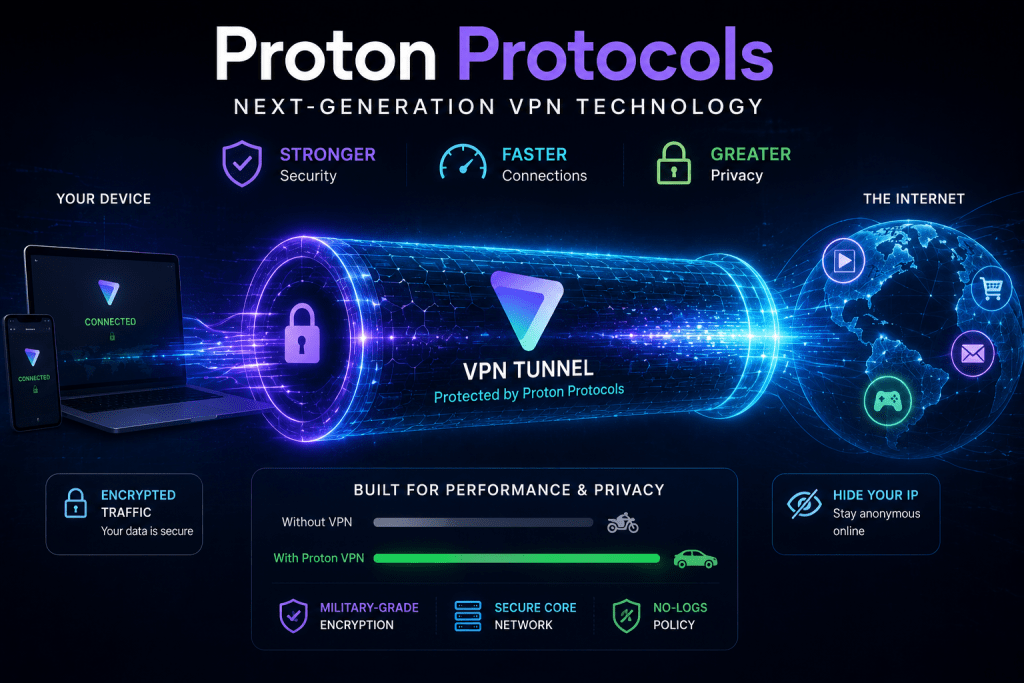
Proton Protocols aims to build on these by offering a foundation designed specifically to support the next generation of Proton VPN apps. This design focuses on three main areas: performance, connection reliability, and resistance to network censorship.
Performance Improvements
Speed is a crucial factor when choosing a VPN. Slow VPNs can frustrate users, especially when streaming, gaming, or conducting bandwidth-heavy tasks. Proton Protocols has been engineered to enhance speed through more efficient data handling and optimised network communication.
For example, the new codebase reduces latency and speeds up connection times, meaning users spend less time waiting for their VPN to connect and more time online. This is particularly beneficial for users who frequently switch between servers or use mobile networks with fluctuating signal quality.
Reliability and Stability
VPN connections can drop for various reasons, including network changes, weak signals, or server overloads. Proton Protocols addresses these issues by introducing more robust connection management. This includes faster recovery from interruptions and smoother handling of network handovers, such as moving between Wi-Fi and mobile data.
This reliability is especially important for users in the UK who might travel or work from different locations. It also helps maintain uninterrupted access to sensitive services that require a stable VPN connection, such as banking or secure communications.
Censorship Resistance
Some countries impose restrictions on VPN traffic, blocking or throttling connections to prevent access to certain content. Proton Protocols is designed with enhanced resistance to such censorship efforts.
By using advanced obfuscation techniques, the new protocol can better disguise VPN traffic, making it harder for restrictive networks to detect or block. While this may be more relevant for users in countries with strict internet controls, it also offers peace of mind for anyone looking to protect their privacy in environments with network monitoring.
Practical Impact for VPN Users
In practice, Proton Protocols could mean faster browsing, smoother video streaming, and fewer dropped connections for Proton VPN users. For instance, someone streaming a live sports event while connected to Proton VPN should see reduced buffering and less delay.
Additionally, users who often switch networks—such as moving from home Wi-Fi to mobile data—would benefit from a more seamless experience, as the protocol handles these changes more gracefully without dropping the VPN connection.
That said, these improvements are currently available through Proton VPN’s own applications, and the protocol remains proprietary. This means it is not yet an open standard like WireGuard, which may limit adoption by other VPN providers or independent audits.

Trade-offs and Considerations
One thing to keep in mind is that while Proton Protocols offers speed and reliability benefits, the actual performance can vary depending on the user’s device, connection quality, and location. No VPN protocol can guarantee perfect speed under all conditions.
Another consideration is the proprietary nature of the protocol. Open-source protocols benefit from wider security scrutiny and community trust. Proton Protocols’ closed development may invite questions about transparency, though ProtonVPN has a strong reputation for privacy and security.
Conclusion
Proton Protocols represents a notable advancement in VPN protocol design, focusing on faster connections, improved reliability, and better resistance to censorship. For users of Proton VPN, these improvements could enhance everyday browsing and streaming experiences while maintaining strong privacy protections.
As with any new technology, it’s important to assess the benefits alongside potential limitations such as proprietary control and variable real-world performance. Proton Protocols adds a new option to the VPN landscape, and it will be interesting to see how it evolves and whether other providers adopt similar innovations.
Frequently Asked Questions about Proton Protocols
What makes Proton Protocols different from other VPN protocols?
Proton Protocols is a new codebase specifically designed by ProtonVPN to improve speed, reliability, and censorship resistance. Unlike common protocols such as OpenVPN or WireGuard, it focuses on optimising connection stability and faster recovery from network changes.
Can I use Proton Protocols with any VPN service?
Currently, Proton Protocols is proprietary and available only through ProtonVPN apps. It is not supported by other VPN providers or third-party VPN clients.
Is Proton Protocols more secure than existing protocols?
Proton Protocols includes modern encryption standards and security features, but since it is relatively new and closed-source, it has not yet undergone the same level of independent security audits as established protocols like WireGuard.
Will Proton Protocols improve my VPN connection speed?
In many cases, yes. Proton Protocols is engineered to reduce latency and speed up connection times, which can result in faster and more responsive VPN connections, especially when switching networks or using mobile data.
Does Proton Protocols help bypass internet censorship?
Yes. The protocol includes obfuscation techniques that make VPN traffic harder to detect and block, which can be useful in restrictive network environments.
Some VPN Options for you
Nord VPN
Online VPN service that encrypts your internet traffic and hides your IP with physical location. Upgrade your privacy and security…
Trustpilot: ★★★★☆ (4.1)
Monthly Price: £11.09
Surfshark
Get Surfshark and stay protected. 3200+ servers worldwide. Unlimited devices. Audited: No-logs VPN. RAM-only servers. 24/7 support.
Trustpilot: ★★★★☆ (4.3)
Monthly Price: £11.99
Pure VPN
A VPN service helps you break free from location restrictions – so you can enjoy more of what you love.…
Trustpilot: ★★★★☆ (4.3)
Monthly Price: £12.95
IP Varnish
Help protect private information like your location data, personal identity, and browsing history when you use the internet on any…
Trustpilot: ★★★★☆ (4.6)
Monthly Price: £12.99
Cyber Ghost
With more than 7000 servers, it offers top privacy for all devices, Windows, iOS, Mac, Android, or Linux.
Trustpilot: ★★★★☆ (4.8)
Monthly Price: £10.89