
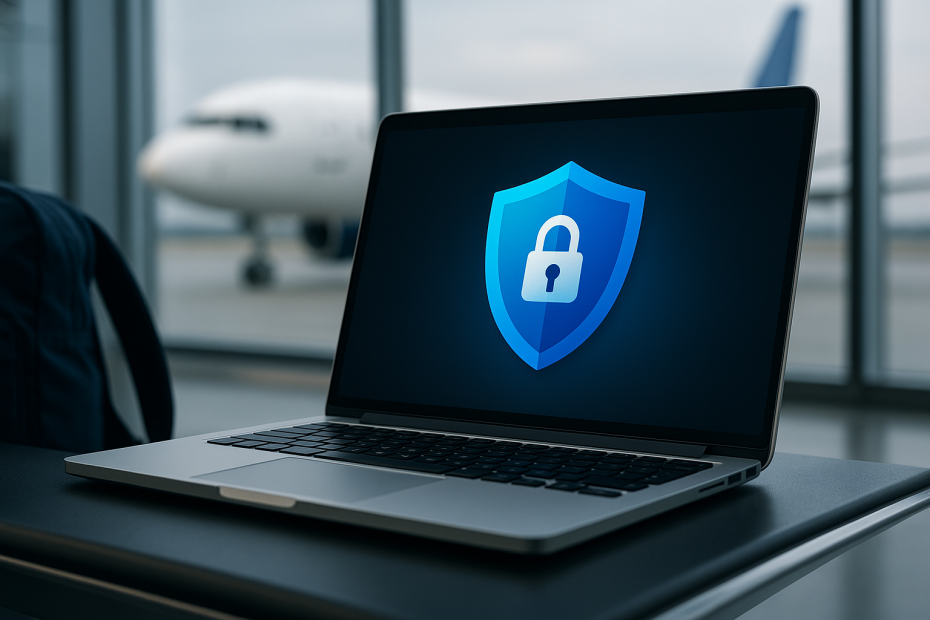
Why I Always Use a VPN on My Laptop When Travelling
Travelling often means relying on public Wi-Fi networks at airports, hotels, and cafes. While these connections are convenient, they can also expose your personal data to cybercriminals. For most people, a virtual private network (VPN) is an essential tool to secure their online activity when away from home. This article explains why I never board a plane without a VPN on my laptop and what you should consider before connecting to public Wi-Fi.
The Risks of Public Wi-Fi
Public Wi-Fi networks are usually unsecured, meaning the data you send and receive isn’t encrypted. Cybercriminals often exploit these open networks by intercepting communications or setting up fake hotspots to steal personal information. For example, someone could capture your login credentials or monitor your browsing if you’re accessing unencrypted websites.
This matters because when you’re travelling, you often handle sensitive tasks like checking emails, managing bank accounts, or booking accommodations online. Without protection, all this information is vulnerable to interception. According to PCMag UK, Wi-Fi hotspots are a boon to crooks who monitor open networks, making a VPN a crucial defence.
What Exactly Is a VPN?
A VPN creates a secure, encrypted tunnel between your laptop and a VPN server before your internet traffic reaches the wider web. This encryption makes it extremely difficult for anyone on the same network to snoop on your data. In practice, a VPN masks your IP address and scrambles your traffic, protecting your privacy and making you appear as if you are browsing from a different location.
Using a VPN on your laptop while travelling can prevent hackers from capturing your passwords, credit card numbers, or other sensitive information—even when using insecure public Wi-Fi.
Practical Examples of VPN Use While Travelling
Consider arriving at an airport and connecting to the free Wi-Fi to check flight details or send messages. Without a VPN, your data is exposed to anyone else connected to that network. However, with a VPN active, your connection is encrypted, so even if someone is monitoring the network, the information they see is scrambled and unreadable.
Similarly, at hotels, many guests use the same Wi-Fi network. A VPN reduces the risk of eavesdropping by encrypting traffic, helping to keep your online activities private.
Trade-offs and Considerations
While VPNs offer significant security benefits, it’s important to be aware of some limitations. VPN services can sometimes slow down your internet speed due to the encryption process and the extra distance your data travels to the VPN server. Some websites or streaming services may block or restrict access when they detect VPN use.
Moreover, not all VPN providers offer the same level of privacy or security. Before choosing a VPN, it’s wise to compare providers based on factors like server locations, encryption standards, logging policies, and pricing. A sensible starting point is to consult a VPN comparison site that focuses on reliable, trustworthy services.
Conclusion: A VPN Is a Travel Essential
In reality, a VPN is one of the simplest and most effective tools for protecting your personal data when travelling. Using one on your laptop before connecting to airport or hotel Wi-Fi minimises the risk of data theft and keeps your online activity more private. While there are trade-offs, such as potential speed reductions, the security advantages generally outweigh the downsides for most travellers.
Before your next trip, consider installing a well-reviewed VPN and understand how to use it correctly. This small step can prevent a lot of potential headaches and keep your information safe on the road.
Frequently Asked Questions
1. Can I use a free VPN when travelling?
Free VPNs may seem attractive, but they often have limitations such as slower speeds, fewer servers, and weaker privacy protections. Some may even collect and sell your data. For travel security, it’s generally better to choose a reputable paid VPN service.
2. Does a VPN protect me on all public Wi-Fi networks?
A VPN encrypts your data on any network, so it improves security wherever you connect. However, it does not protect against all online threats, such as phishing attacks or malware. Using a VPN is one part of a broader approach to online safety.
3. Will a VPN work on my smartphone as well as my laptop?
Yes, most VPN providers offer apps for multiple devices, including smartphones and tablets. This is useful since many people use their phones on public Wi-Fi while travelling.
4. Can a VPN help me access content blocked in certain countries?
A VPN can allow you to connect to servers in different countries, potentially bypassing geographic restrictions. However, some streaming services actively block VPN traffic, so success varies depending on the provider and service.
5. Is it legal to use a VPN while travelling?
Using a VPN is legal in most countries, including the UK. However, some countries restrict or ban VPN use, so it’s important to check local laws if you’re travelling internationally.
Some VPN Options for you
Nord VPN
Online VPN service that encrypts your internet traffic and hides your IP with physical location. Upgrade your privacy and security…
Trustpilot: ★★★★☆ (4.1)
Monthly Price: £11.09
Surfshark
Get Surfshark and stay protected. 3200+ servers worldwide. Unlimited devices. Audited: No-logs VPN. RAM-only servers. 24/7 support.
Trustpilot: ★★★★☆ (4.3)
Monthly Price: £11.99
Pure VPN
A VPN service helps you break free from location restrictions – so you can enjoy more of what you love.…
Trustpilot: ★★★★☆ (4.3)
Monthly Price: £12.95
IP Varnish
Help protect private information like your location data, personal identity, and browsing history when you use the internet on any…
Trustpilot: ★★★★☆ (4.6)
Monthly Price: £12.99
Cyber Ghost
With more than 7000 servers, it offers top privacy for all devices, Windows, iOS, Mac, Android, or Linux.
Trustpilot: ★★★★☆ (4.8)
Monthly Price: £10.89