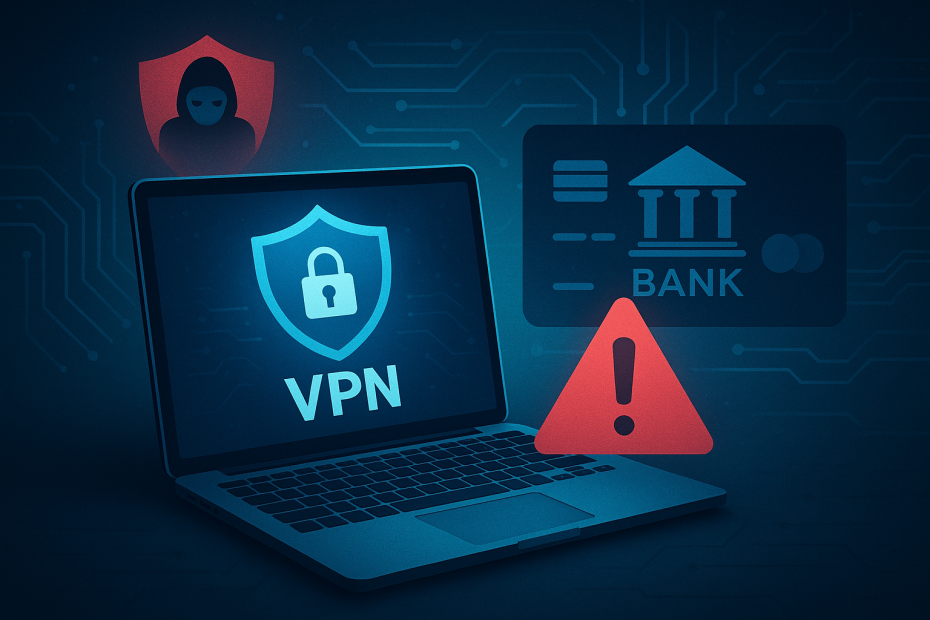
Why Using a VPN for Online Banking Can Trigger Fraud Alerts
Virtual Private Networks, or VPNs, are widely recognised as valuable tools for protecting online privacy and security. They encrypt your internet traffic and mask your IP address, making it harder for cybercriminals to intercept your data. However, when it comes to online banking, using a VPN can sometimes cause unintended problems.
Many banks monitor login locations and IP addresses to detect suspicious activity. If your bank account suddenly shows access from an IP address or location that doesn’t match your usual pattern, it may trigger fraud alerts. This can lead to your account being temporarily frozen or flagged for review, causing inconvenience and anxiety.
What Happens When You Use a VPN for Banking?
When you connect to a VPN, your internet traffic is routed through servers in different locations, often abroad. To your bank, this can look like someone is logging in from a foreign country or an unfamiliar IP address. Even if you’re just trying to protect your credentials from potential eavesdroppers, the bank’s security systems may interpret this as a possible hacking attempt.
This is especially common with popular VPN providers that use shared IP addresses, meaning multiple users appear to be connecting from the same location. Banks can be more suspicious of these IPs because they are often associated with VPN services, which some fraudsters also use to conceal their tracks.
Practical Implications for VPN Users and Bank Customers
For most people, the inconvenience of a blocked bank account can outweigh the benefits of using a VPN for financial transactions. Imagine logging into your online banking only to find your access restricted, requiring you to contact customer support to verify your identity. This can be frustrating and time-consuming, especially if it happens repeatedly.
One example is a UK user who tried to access their bank account with a VPN connected to a server in Germany. The bank flagged this as suspicious and locked the account pending verification. Even though the user’s credentials were secure, the VPN’s location change triggered the alert.
On the other hand, some banks have more sophisticated fraud detection systems that consider additional factors such as device fingerprinting or behavioural analysis. These systems might be less likely to flag VPN use, but this depends heavily on the individual bank’s policies and technology.
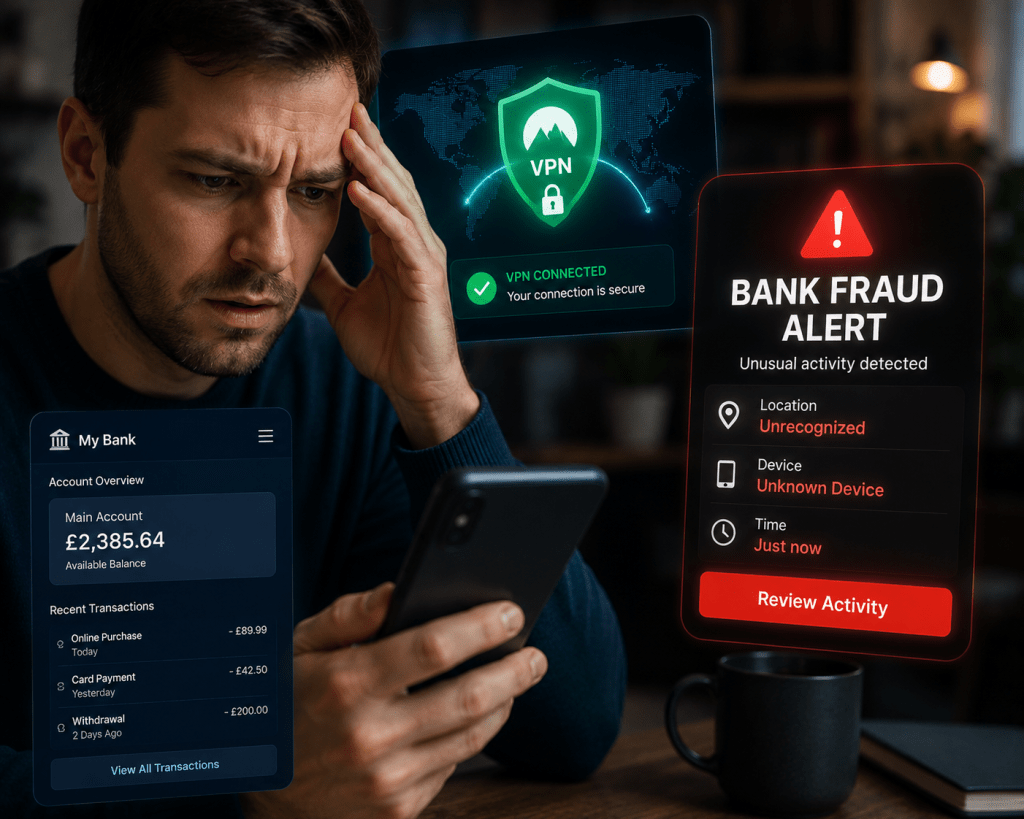
Balancing Security and Convenience
Using a VPN is a well-established way to enhance your privacy online, but when it comes to banking, there are trade-offs to consider. If you rely on a VPN for general browsing or streaming, that is unlikely to cause issues. However, for online banking, it is often better to minimise complications.
One sensible approach is to disconnect from your VPN when accessing your bank, especially if you usually connect from a consistent location. This helps avoid triggering fraud alerts related to location changes. If you must use a VPN, choosing one with dedicated IP addresses might reduce the risk of being flagged, although this can come at an additional cost.
It is also important to understand that a VPN does not replace other essential security measures like two-factor authentication (2FA) or strong, unique passwords. Banks encourage multiple layers of protection, and VPNs are just one part of a broader security strategy.
Conclusion: Using VPNs with Online Banking Requires Care
VPNs play a vital role in online privacy and security, but their use can inadvertently cause banks to flag accounts as potentially hacked. This happens because VPNs mask your real IP address and location, which may not match your usual banking behaviour.
For everyday banking, disconnecting your VPN or using a dedicated IP can help avoid unnecessary fraud alerts. It’s also wise to combine VPN use with other security features offered by your bank. Understanding these trade-offs ensures you can protect your data without risking account disruptions.
If you want to explore VPN options that suit your needs, a vpn comparison can help you weigh the pros and cons, including how they might affect online banking activities.
FAQs About Using VPNs and Online Banking
1. Can I use a VPN safely with my bank account?
You can use a VPN with your bank, but it may trigger fraud alerts if your login location changes unexpectedly. To avoid this, consider disconnecting the VPN when banking or using a VPN with dedicated IP addresses.
2. Why do banks flag VPN usage as suspicious?
Banks track login locations and IP addresses to detect fraud. VPNs mask your real location, which can look like unauthorised access, especially if the IP is shared or from a different country.
3. Does using a VPN improve my online banking security?
While VPNs encrypt your internet connection, they do not replace bank-specific security measures like strong passwords or two-factor authentication. VPNs help protect your data from public Wi-Fi threats but may cause login issues with some banks.
4. What should I do if my bank account gets frozen due to VPN use?
Contact your bank’s customer service to verify your identity and explain the situation. They can usually restore access after confirming it’s you. It’s advisable to avoid VPN use during banking in the future.
5. Are there VPNs better suited for online banking?
Some VPN providers offer dedicated IP addresses or servers optimised for banking, which might reduce the risk of being flagged. However, these options can be more expensive and are not foolproof.
For a detailed look at VPN providers and their features, a thorough vpn service comparison can assist you in finding one that fits your requirements, including considerations for banking security.
Some VPN Options for you
Nord VPN
Online VPN service that encrypts your internet traffic and hides your IP with physical location. Upgrade your privacy and security…
Trustpilot: ★★★★☆ (4.1)
Monthly Price: £11.09
Surfshark
Get Surfshark and stay protected. 3200+ servers worldwide. Unlimited devices. Audited: No-logs VPN. RAM-only servers. 24/7 support.
Trustpilot: ★★★★☆ (4.3)
Monthly Price: £11.99
Pure VPN
A VPN service helps you break free from location restrictions – so you can enjoy more of what you love.…
Trustpilot: ★★★★☆ (4.3)
Monthly Price: £12.95
IP Varnish
Help protect private information like your location data, personal identity, and browsing history when you use the internet on any…
Trustpilot: ★★★★☆ (4.6)
Monthly Price: £12.99
Cyber Ghost
With more than 7000 servers, it offers top privacy for all devices, Windows, iOS, Mac, Android, or Linux.
Trustpilot: ★★★★☆ (4.8)
Monthly Price: £10.89