
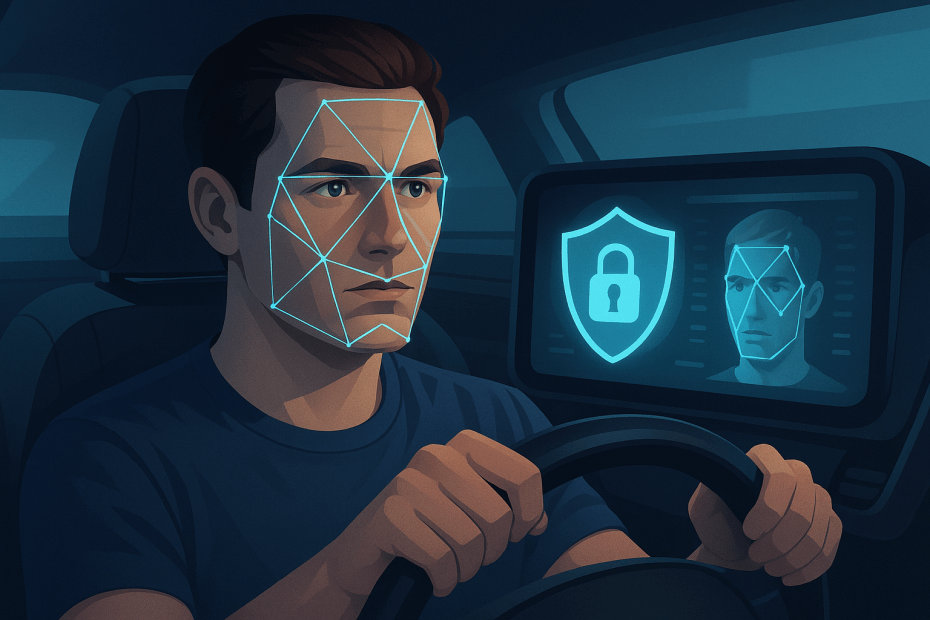
Modern vehicles are evolving beyond their traditional roles, integrating technology that monitors drivers more closely than ever before. Driver-monitoring systems, often using facial recognition, are becoming a mandatory feature in new cars. While these systems aim to enhance road safety, they also bring fresh privacy challenges. This article explores what these technologies mean for drivers and how tools like VPNs might fit into the picture.
What Is Driver-Monitoring Technology?
Driver-monitoring technology typically involves cameras and sensors inside the car that observe the driver’s face and behaviour. These systems can detect signs of fatigue, distraction, or even if the driver is looking away from the road. The goal is to alert drivers or take corrective action — such as sounding alarms or slowing the vehicle — to prevent accidents.
This technology is becoming mandatory due to regulations aimed at reducing road accidents caused by driver inattention or drowsiness. For instance, some new models are equipped with infrared cameras that work in low-light conditions to maintain constant observation of facial expressions.
Privacy Risks Associated with In-Car Facial Recognition
Although these systems have clear safety advantages, privacy experts warn that constant facial monitoring could introduce new risks. The data collected by these cameras isn’t just about whether you’re paying attention. It can include detailed biometric information that, if mishandled, might be used for purposes beyond safety — such as targeted advertising or surveillance.
Another concern is data security. If the vehicle’s systems connect to the internet or other networks, there’s a possibility that this sensitive data could be intercepted or hacked. In the worst case, unauthorised access could allow malicious actors to monitor individuals without their consent.
For example, if a car manufacturer shares facial data with third-party services or insurance companies, this could lead to profiling based on driving habits or emotional states. This raises questions about consent and the scope of data use, which many drivers may not fully understand when they buy a new car.
How VPNs Can Help Protect Your Privacy on the Road
While driver-monitoring cameras themselves are hardware components, many modern vehicles connect to the internet for updates, entertainment, navigation, and remote diagnostics. This connectivity means data flows to and from your car, potentially exposing it to interception.
A virtual private network (VPN) can be a useful tool in this context. A VPN encrypts your internet connection, making it harder for third parties to spy on your data traffic. When used in conjunction with a secure in-car Wi-Fi or mobile hotspot, a VPN can help protect sensitive information from being intercepted on public or unsecured networks.
However, it’s important to understand that VPNs do not prevent facial data from being collected by the car’s cameras. Instead, they secure your online data transmissions. If privacy is your priority, combining VPN use with cautious data-sharing settings offered by the car’s software is advisable.
Practical Examples: Driver Monitoring and VPN Use
Consider a driver who frequently uses their car’s Wi-Fi hotspot while travelling. Without a VPN, data sent over public networks, such as route history or diagnostic reports, could be vulnerable. By activating a VPN, the driver adds a layer of encryption that helps protect this information.
On the other hand, the facial recognition system inside the car operates locally and may store data on the vehicle’s internal systems or send it to the manufacturer’s servers. If the car’s software lacks strong privacy controls, VPN protection won’t prevent this data collection but can safeguard internet communications.
Balancing Safety and Privacy
There’s a good reason why driver-monitoring systems are becoming widespread: they can reduce accidents caused by distraction or fatigue. However, the privacy trade-offs are significant and deserve careful consideration.
Before purchasing a new vehicle with such technology, it’s sensible to review the manufacturer’s privacy policy and data handling practices. Ask whether facial data is stored locally or shared externally, and what options exist to limit data collection. Transparency in these policies varies, so informed consumers should seek out this information.
Conclusion
Driver-monitoring technology represents a step towards safer roads by keeping a watchful eye on driver alertness. Yet, it also introduces privacy challenges that have yet to be fully addressed. For most people, understanding these trade-offs is crucial when considering a car equipped with facial recognition.
VPNs can assist in protecting the data your car sends over the internet, but they do not stop in-car cameras from collecting biometric information. Staying informed about your vehicle’s data practices and using privacy tools like VPNs can help maintain control over your personal information while benefiting from new safety technologies.
Frequently Asked Questions
1. What data do driver-monitoring systems collect?
These systems mainly collect facial images and behavioural data to assess attention and fatigue. Some may also record other biometric details, depending on the technology used.
2. Can VPNs prevent my car’s cameras from watching me?
No. VPNs encrypt your internet traffic but cannot block cameras embedded in your vehicle. Privacy concerns about facial recognition relate to how that data is stored and used, not online transmissions.
3. Are driver-monitoring systems mandatory in all new cars?
Regulations are increasingly requiring these systems in new vehicles, particularly in certain markets, to improve safety. However, requirements vary by country and manufacturer.
4. How can I check what data my car collects and shares?
Review the vehicle’s privacy policy, which should outline data collection and sharing practices. You can also consult the manufacturer or dealer for detailed information.
5. Does using a VPN protect all my in-car data?
VPNs protect data transmitted over the internet but do not affect data collected internally by the car’s systems. Combining VPN use with careful privacy settings is the best approach.
For more detailed information on this topic, visit Malwarebytes Blog.