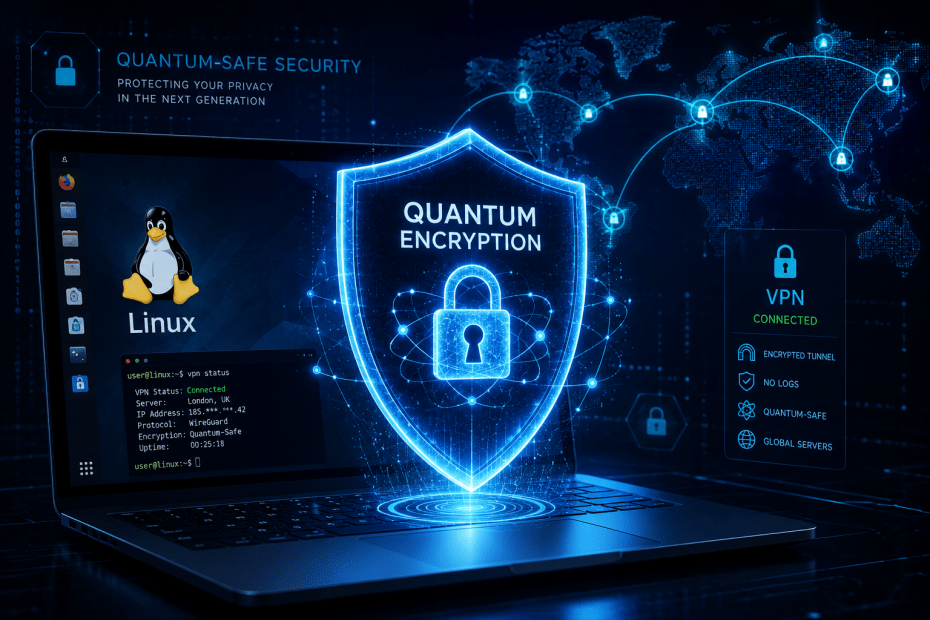
NordVPN, one of the most recognised VPN providers worldwide, has taken a notable step towards future-proofing online security by incorporating quantum-resistant encryption into its Linux client. This development introduces post-quantum cryptography that has received approval from the National Institute of Standards and Technology (NIST), a key US agency setting cryptographic standards. Currently available only on Linux, NordVPN plans to extend this feature to all platforms by early 2025.
What Is Quantum Encryption and Why Does It Matter?
Quantum encryption, or more precisely post-quantum cryptography, refers to cryptographic algorithms designed to resist attacks from quantum computers. Unlike classical encryption methods such as RSA or ECC, which rely on the difficulty of factoring large numbers or discrete logarithms, quantum computers could potentially solve these problems much faster, threatening current encryption standards.
In simple terms, as quantum computing advances, the encryption methods securing much of today’s internet traffic—including VPN connections—may become vulnerable. Post-quantum cryptography aims to develop new algorithms that can withstand such powerful computational attacks, ensuring long-term confidentiality and integrity of data.
How Does NordVPN’s Quantum-Resilient Encryption Work?
NordVPN’s implementation uses algorithms that have been vetted and approved by NIST, which runs a rigorous multi-year process to evaluate cryptographic methods for security and practical use. Integrating these into the Linux client means NordVPN is preparing to safeguard user data against future quantum threats.
This feature currently coexists with traditional encryption methods, offering a hybrid approach. This means users benefit from the immediate security of current standards alongside added protection against potential quantum attacks. The Linux client is the testing ground for this new technology before it reaches other platforms.
Why Is This Update Initially Limited to Linux?
Linux users often represent a more technical audience, which makes it a sensible starting point for introducing complex encryption updates. Linux clients tend to be more flexible for testing new cryptographic protocols, and users are typically more receptive to early adoption and troubleshooting.
Extending quantum encryption to Windows, macOS, Android, and iOS involves additional challenges related to platform-specific constraints and user experience considerations. NordVPN aims to roll out this feature across all apps by the first quarter of 2025, signalling a cautious but clear commitment to enhancing security across its entire user base.
What Are the Practical Benefits for VPN Users?
For most VPN users, the immediate practical impact of quantum encryption might not be obvious. Today’s VPN encryption remains robust against classical attacks, so daily browsing, streaming, and privacy protection are unlikely to be noticeably affected.
That said, if you’re concerned about long-term privacy—for example, if you’re a journalist, activist, or someone handling highly sensitive information—post-quantum encryption adds an extra assurance that your data remains confidential even as quantum computing capabilities improve.
Think of it like locking your front door with both a modern lock and an additional deadbolt designed to resist future lock-picking techniques. It might not change your daily routine but could prove critical in the future.
Are There Any Downsides or Limitations?
One trade-off with quantum-resistant algorithms is that they tend to be more computationally intensive. This can lead to slightly slower connection speeds or increased battery consumption, though the impact varies depending on the device and usage.
Another consideration is that post-quantum cryptography is still relatively new. Although NIST’s approval signals confidence, the field is evolving, and no encryption method can claim absolute future-proofing. Additionally, until rolled out on all platforms, only Linux users can benefit directly from this advancement.
The Bigger Picture: VPN Security and Quantum Threats
VPN services play a crucial role in protecting user privacy and security by encrypting internet traffic and masking IP addresses. As quantum computing develops, attackers might eventually use it to break conventional encryption, potentially exposing sensitive data transmitted via VPNs.
By adopting NIST-approved post-quantum cryptography early, NordVPN is positioning itself ahead of this curve. It reflects a cautious approach to emerging threats, acknowledging that quantum computing may not be an immediate risk today but could become significant in the next decade.
This move also sets a precedent for other VPN providers, encouraging the broader industry to prepare for quantum-era challenges rather than waiting for a crisis to emerge.
Conclusion
NordVPN’s introduction of quantum-resistant encryption on its Linux client marks an important milestone in VPN security. While the feature currently affects a limited user base, it signals a proactive approach to future-proofing online privacy against emerging quantum threats. For everyday users, the advantages may not be immediately noticeable, but those who require long-term confidentiality have a reason to pay attention.
Extending this technology across all platforms by 2025 will be a development worth watching, as it highlights how VPN providers are adapting to the changing digital security landscape. In the meantime, NordVPN continues to offer strong protection through established encryption while exploring advanced cryptographic methods.
For further details, see the original report on RestorePrivacy.
Frequently Asked Questions
What is post-quantum cryptography?
Post-quantum cryptography consists of encryption methods designed to be secure against attacks by quantum computers, which could potentially break current encryption algorithms.
Why is NordVPN focusing on Linux first for quantum encryption?
Linux users often represent a more technical audience, making it easier to test new cryptographic technology before wider deployment to other platforms.
Will quantum encryption make my VPN connection slower?
Quantum-resistant algorithms can be more resource-intensive, which might cause slight performance changes, though the impact depends on the device and usage scenario.
Is quantum encryption necessary for everyday VPN users?
For most people, current VPN encryption is sufficient. Quantum encryption is more relevant for users seeking long-term privacy against future quantum computing threats.
When will NordVPN add quantum encryption to other apps?
NordVPN plans to roll out quantum-resistant encryption across all its applications by the first quarter of 2025, according to the provider.